

Could calcium flux assays be the missing link in unlocking unprecedented insights into cellular signalling? Integral to drug discovery and neuroscientific research, these assays are transforming how scientists understand Gq-coupled GPCR activity, alongside the intricate roles of calcium ions in cellular processes. By exploring the principle of calcium flux assays, their reliance on calcium indicators, and fluorescence techniques, this article delves into their critical application in cellular signal research. Discover how these powerful assays could redefine scientific approaches in pharmacology and beyond.
Understanding the Principle of Calcium Flux Assay
Calcium flux assays are indispensable tools for investigating the activity of Gq-coupled G-protein-coupled receptors (GPCRs), especially within the framework of drug discovery. These assays measure intracellular calcium ion movement, a critical component in cellular signalling pathways. By quantifying calcium ion concentrations, researchers can evaluate cellular responses to pharmacological agents, helping to identify potential therapeutic targets and elucidate drug mechanisms. The ability to monitor calcium flux in real-time provides insights into dynamic cellular processes, making these assays vital for both basic research and applied sciences.
Calcium indicators are central to the efficacy of calcium flux assays. These indicators, such as indo1 and Rhod-2, bind to calcium ions and emit fluorescence upon excitation. This fluorescence serves as a direct measure of calcium concentration within cells. Fluorescence assays leverage these indicators to provide high-resolution data on calcium dynamics, enabling the detection of subtle changes in calcium levels. The specificity and sensitivity of these indicators are paramount, allowing for precise quantification of calcium flux across a wide range of experimental conditions.
In the realm of cellular signalling research, the application of calcium flux assay extends beyond pharmacology. These assays are instrumental in deciphering the roles of calcium ions in various physiological processes, such as muscle contraction, neurotransmitter release, and gene expression. By illuminating calcium-mediated signalling pathways, researchers can better understand disease mechanisms and develop targeted interventions. The integration of calcium flux assays into research protocols is thus crucial for advancing our knowledge of cellular function and dysfunction.
Essential Calcium Indicators:
- Indo1
- Rhod-2
- Fluo-4
- Fura-2
- Calcium Green-1
Step-by-Step Calcium Flux Assay Protocol
The calcium flux assay begins with meticulous cell preparation to ensure reliable results. Cells are cultured under optimal conditions, maintaining a healthy state throughout the experiment. Typically, adherent cells are grown to 70-80% confluency before assay initiation. For suspension cells, a precise cell density is critical, necessitating counting and adjusting concentrations using a haemocytometer or automated cell counter. Following seeding into microplates, cells are incubated to allow attachment and recovery, ensuring they are in a physiological state conducive to accurate calcium flux measurement.
Reagent preparation is a crucial step, involving the loading of calcium indicators such as indo1. These indicators are dissolved in DMSO or a suitable solvent and diluted to working concentrations in assay buffer, often containing probenecid to inhibit dye efflux. The loading process involves incubating cells with the dye under optimal conditions, usually at 37°C for 30-60 minutes, allowing the indicator to permeate the cell membrane effectively. It’s essential to protect the dye from light exposure throughout this procedure to prevent photobleaching.
The analysis process typically employs flow cytometry or fluorescence plate readers to quantify calcium flux. Following dye loading, cells are washed to remove excess indicator and resuspended in buffer. The assay is initiated by adding a stimulus, such as a specific agonist, to trigger calcium release. Real-time changes in fluorescence are recorded, providing a dynamic profile of calcium mobilization. Calibration with known calcium concentrations aids in translating fluorescence intensity into meaningful calcium levels, enhancing the assay’s quantitative accuracy.
Controls and optimisation are essential components of the assay protocol, ensuring data reliability and reproducibility. Control wells, including unstimulated and maximum response wells, help in normalising results and assessing assay performance. Optimising dye concentration is pivotal to avoid cytotoxicity and ensure robust signal detection. A balance between sensitivity and specificity must be maintained, with rigorous testing of experimental conditions to refine protocol parameters for different cell types and experimental needs.
| Step | Description | Important Considerations |
|---|---|---|
| 1. Cell Preparation | Cultivate cells to appropriate confluency. | Ensure cells are healthy and physiological. |
| 2. Indicator Loading | Load cells with calcium indicator dye. | Protect dye from light to prevent photobleaching. |
| 3. Analysis | Measure fluorescence changes using flow cytometry. | Calibrate with known calcium standards. |
| 4. Controls | Use unstimulated and maximum response controls. | Normalise results for accuracy. |
| 5. Optimisation | Adjust dye concentration and conditions. | Balance sensitivity with non-toxicity. |
Necessary Reagents and Equipment for Calcium Flux Assays
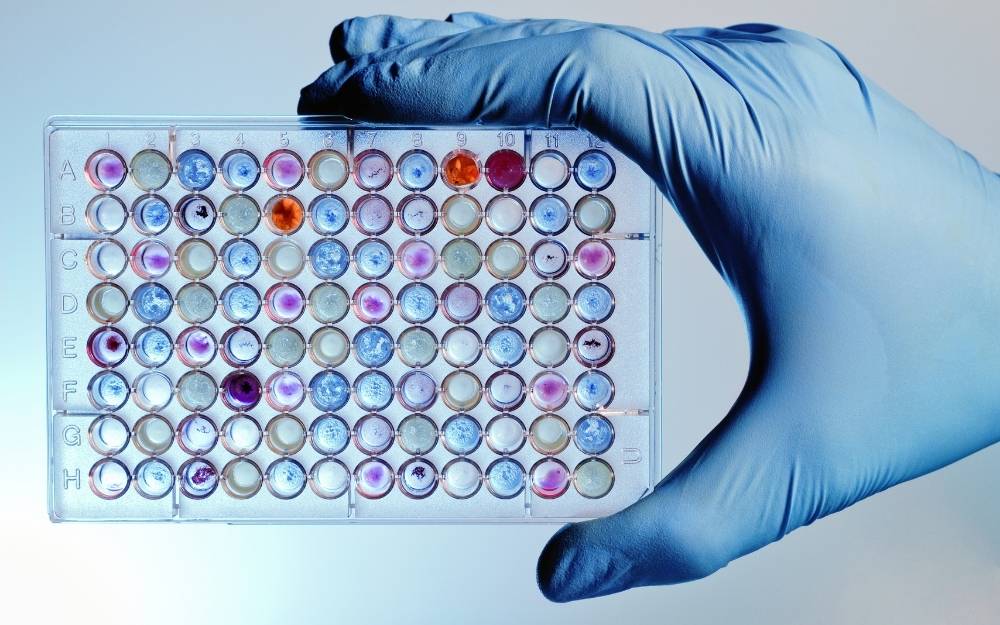
Quality reagents and precise equipment form the backbone of successful calcium flux assays. High-resolution monitoring technologies ensure that subtle changes in calcium ion concentrations are accurately captured, which is crucial for reliable data interpretation. The use of robust microplate readers, like the FLIPR Tetra® system, facilitates the measurement of calcium flux in a high-throughput manner. Fluorescent dyes such as Fluo-8 are indispensable, providing the sensitivity needed to detect real-time changes in intracellular calcium levels. These elements collectively enable researchers to conduct assays with enhanced precision and reliability.
Essential Items for Calcium Flux Assays:
- Microplate readers (e.g., FLIPR Tetra®)
- Fluorescent dyes (e.g., Fluo-8)
- Assay kits
- Pipettes and multi-channel pipettors
- Cell culture plates
- Buffer solutions
Technological advancements have significantly improved the accuracy of calcium flux assays. Innovations in microplate reader technology allow for rapid and sensitive detection of fluorescent signals, reducing potential errors associated with manual measurements. The incorporation of advanced assay kits and dyes enhances the assay’s dynamic range and sensitivity, allowing for more detailed analysis of cellular responses. As a result, researchers can achieve higher throughput and more reproducible results, which are critical for both basic research and drug discovery applications.
Interpreting and Troubleshooting Calcium Flux Assay Results
Accurate data interpretation in calcium flux assays hinges on a systematic approach to analysing fluorescence signals. The initial step involves normalising the signal-to-background ratio, which ensures that results are consistent across different experiments. By subtracting baseline fluorescence from the total signal, researchers can accurately determine the extent of calcium influx. Kinetic analysis is then employed to assess the dynamics of calcium mobilisation, typically focusing on parameters such as peak height, time to peak, and area under the curve. These metrics provide a comprehensive view of cellular responses, facilitating the identification of specific signalling pathways affected by experimental treatments.
Data Analysis Techniques
Normalising data is a critical step in calcium flux assays. This process involves adjusting raw fluorescence readings to account for background noise, thus enhancing the clarity of the results. By using control wells devoid of stimuli, researchers establish baseline fluorescence levels, which are then used to normalise experimental data. Quantifying calcium dynamics requires careful analysis of kinetic parameters. Researchers must evaluate changes in fluorescence over time to pinpoint the speed and magnitude of calcium release. This dynamic profiling is vital for understanding the intricate signalling networks within cells.
Troubleshooting Common Issues
Common challenges in calcium flux assays often stem from assay sensitivity and reagent inconsistencies. If there is insufficient fluorescence signal, it might be necessary to optimise dye concentration or incubation times. Ensuring that the dye is fully permeated into cells and that cells are responding uniformly to stimuli can alleviate weak signal issues. Another frequent problem is high background noise, which can be mitigated by using high-quality reagents and maintaining stringent experimental conditions. Additionally, validating the assay’s performance with known standards and controls is essential to pinpoint and rectify discrepancies effectively.
Ensuring assay sensitivity and maintaining rigorous controls are paramount for producing reliable results. Sensitivity is crucial for detecting minute changes in calcium levels, which can be achieved by selecting appropriate dyes and optimizing experimental conditions. Controls, including negative and positive controls, are indispensable for benchmarking assay performance. These controls help in distinguishing between true biological signals and artefacts, ensuring that the data reflects genuine cellular activities. By prioritising sensitivity and control integrity, researchers can enhance the reproducibility and accuracy of calcium flux assays, paving the way for more robust scientific conclusions.
Applications of Calcium Flux Assays in Research
Calcium flux assays are pivotal in a wide array of research applications due to their ability to measure intracellular calcium ion dynamics accurately. These assays are fundamental in studying cellular signalling processes, providing insights into how cells respond to external stimuli and regulate various biological functions. By enabling the real-time tracking of calcium movements, researchers can decipher complex signalling pathways, which is crucial for understanding disease mechanisms and cellular responses. Their versatility makes them an indispensable tool in both basic and applied scientific research.
In pharmacological research, calcium flux assays are extensively utilised to investigate drug mechanisms of action and to screen for potential therapeutic compounds. They allow scientists to assess how drugs modulate calcium-mediated signalling pathways, offering insights into their efficacy and potential side effects. Through these assays, researchers can identify agonists or antagonists targeting G-protein-coupled receptors (GPCRs), which are often implicated in various diseases. This capability is vital for drug discovery, as it helps in the development of novel pharmacological interventions.
The role of calcium flux assays in neurobiology is particularly significant, as calcium ions are integral to neuron function and communication. These assays are employed to study synaptic activity, neurotransmitter release, and neuronal excitability, contributing to a deeper understanding of brain function and neurodegenerative conditions. By examining calcium signalling in neurons, researchers can explore the pathophysiology of disorders such as Alzheimer’s and Parkinson’s disease, paving the way for potential treatments and therapeutic strategies.
Specific Research Fields:
- Cancer studies
- Immune cell regulation
- Cardiovascular research
- Neurodegenerative disease investigations
Recent Advances and Innovations in Calcium Flux Assays

Recent innovations in calcium flux assays have significantly enhanced resolution and sensitivity, largely due to technologies like full spectrum profiling. This advanced technique captures the entire emission spectrum of light, allowing researchers to distinguish between fluorochromes with similar emissions. By improving the clarity and detail of fluorescence signals, full spectrum profiling enables more precise measurements of calcium ion dynamics within cells. This advancement is particularly beneficial in complex biological samples where overlapping signals may occur, ensuring accurate and reliable data interpretation.
Automation plays a pivotal role in advancing calcium flux assays by increasing reproducibility and scalability. Automated systems reduce human error, ensuring consistent results across large-scale experiments. This capability is crucial for high-throughput screening, where thousands of samples are analysed simultaneously. Automation not only streamlines the experimental process but also enhances efficiency, allowing researchers to focus on data analysis and interpretation. By integrating automation with innovative assay techniques, laboratories can achieve greater throughput and more robust scientific findings.
Key Advancements in Calcium Flux Assays:
- Full spectrum profiling technology
- Improved assay sensitivity
- Enhanced multiplexing capabilities
Final Words
Understanding the principles of calcium flux assays demonstrates their integral role in drug discovery, where calcium indicators play a crucial part in fluorescence assays. The step-by-step protocol underscores the importance of meticulous preparation and optimisation. Key reagents and equipment, such as Fluo-8 and microplate readers, are vital for assay precision.
Interpreting results and troubleshooting common issues require careful attention to data analysis techniques and assay sensitivity. Applications of calcium flux assays span from pharmacology to neuroscience, providing insight into cellular signalling.
Recent advancements, including automation and full spectrum profiling, continue to enhance the efficacy of the calcium flux assay. These developments promise a brighter future for research and innovation.

A cultural commentator with a deep love for drama and performance, Sophie writes about emerging talents, classic revivals, and the broader impact of theatre on creative expression.